Meta Description: Honest table tennis review & guide for all players. Learn to choose the right blade & rubber for your style, avoid costly mistakes, and elevate your game. Read before you buy.
Introduction
Table tennis is all about fine details—millimeters and grams can make or break a shot. From local players to families or aspiring pros, having the right gear matters. With endless choices and confusing jargon, this guide makes it simple. Rather than naming the “best” paddle, we explain how to choose what fits your style, skill, and budget.
Understanding the Basics: Blade, Rubber, and Spin
Before diving into reviews and selections, you must understand the core components of a table tennis racket (or “bat” or “paddle”).
The Blade: The Foundation of Feel and Power
The blade is the wooden core (often with composite layers). It defines the feel of your racket.
- Speed: Determined by stiffness and composition. Carbon layers increase speed and stiffness; all-wood blades offer more control and feeling.
- Softer, all-wood blades offer more dwell time, helping control and spin.
- Feel: The subjective feedback you get on ball contact. Essential for touch shots like drops and blocks.
The Rubber: The Engine of Spin and Speed
The rubber creates spin. It has a sponge layer and a topsheet.
- Topsheet: The pimpled surface. “Inverted” (pimples-in) rubber is standard, with a smooth, grippy surface for maximum spin.
- A thicker, denser sponge means more speed and power but less control.
The Critical Role of Spin
Spin shapes rallies. Equipment that generates and handles spin is vital. Grippy rubbers with quality sponge are best for heavy spin.
Key Considerations Before You Buy
Choosing equipment isn’t one-size-fits-all. Answer these questions first:
- What is Your Playing Style?
- Offensive Looper: Prioritizes heavy topspin from mid-distance. Needs a blade with good flex and spin-focused rubbers.
- Close-to-the-Table Attacker: Values speed and direct shots. A stiffer, faster blade with medium-thickness sponge works well.
- All-Round Player: Wants balance. A versatile all-wood blade with medium-speed rubbers is ideal.
- Defensive/Chopper: Relies on control and backspin. A flexible, slower blade with specialized long-pimple or anti-spin rubber may be used.
- What is Your True Skill Level?
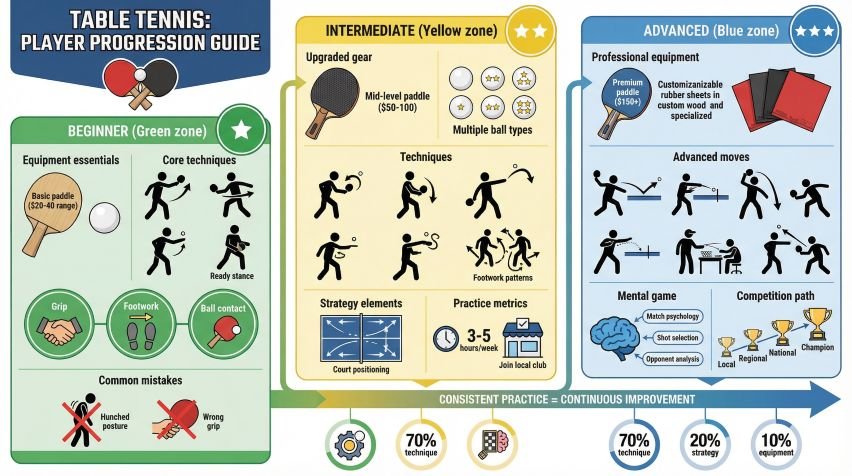
- Beginner/Recreational: Control is king. Avoid fast, carbon blades. Start with an all-wood, all-round blade with lighter, slower rubbers to develop proper technique.
- Intermediate: You have consistent strokes. Now you can specialize. Look for equipment that enhances your developing style without sacrificing all control.
- Advanced/Competitive: You can harness high-speed, spin-sensitive equipment. Your choice becomes highly personalized for tactical advantage.
- What is Your Budget?
Professional setups (separate blade + two sheets of high-end rubber) can cost $200+. Quality pre-assembled rackets for intermediates are $50-$120. For families and schools, durable, consistent pre-mades in the $30-$60 range are sensible. Beware of ultra-cheap “professional” brands on general marketplaces—these are often counterfeit.
Step-by-Step Guide to Selecting Your Equipment: Once you’ve reflected on your needs and preferences, you’re ready for a systematic approach to finding the right gear. Follow these steps to make informed choices.
Record a game or ask a coach: Do you lack speed or struggle with control? This is your key data.
Step 2: Choose Your Blade Category
- All-Wood (5 or 7-ply): Excellent feel and control. Perfect for developing players and all-around styles. Examples: Stiga Allround Classic, Butterfly Primorac.
- Carbon or Composite: Faster, stiffer, with a larger “sweet spot.” Offers less feedback but more direct power. For aggressive players with solid technique. Examples: Butterfly Viscaria, Stiga Carbonado.
Experience the difference a well-chosen blade can make. Check current prices and reviews for top-rated blades from our recommended retail partner.
Step 3: Select Your Rubber
This is where you fine-tune.
- For Spin & Control: Look for rubbers labeled “Tensor” or with “High Tension” technology. They offer a spin catapult effect. Examples: Butterfly Tenergy 05, Xiom Vega Europe.
- For Speed & Direct Play: Harder sponges provide a more direct, less arc-driven trajectory.
- For All-Round Play: Many European and Japanese rubbers offer a superb balance. Examples: Nittaku Fastarc G-1, Andro Rasanter R47.
[Finding the right rubber is critical. Click here to explore our curated comparison of the top 10 rubbers for 2026.
Step 4: Assembly: Glue or Pre-Made?
- Custom Assembly (Blade + Separate Rubbers): Gluing your own (using water-based glue) allows for infinite customization and is the standard for serious players.
- Pre-Assembled Rackets: Convenient and often a better value for beginners/intermediates. Ensure it’s from a reputable table tennis brand (e.g., Stiga, Killerspin, Butterfly).
Expert Tips for the Discerning Player
- Don’t Over-Table. Using equipment faster than your skill level is the #1 technical roadblock. It reinforces bad habits as you struggle to control the power.
- Protect Your Investment. Use racket cases, clean rubbers with dedicated cleaners, and avoid extreme temperatures to prolong gear life.
- The “Holy Grail” is a Myth. Pros change equipment, searching for tiny advantages. Find a setup that feels confident and stick with it to develop consistency.
- Test Before You Invest. If possible, borrow a clubmate’s racket with a setup you’re considering. The feel cannot be fully captured in any review.
- Buy from Authorized Retailers. This is the only surefire way to avoid costly counterfeits of Butterfly, DHS, and other major brands. The discount from a shady site isn’t worth the risk of receiving fake, inferior rubber.
[For coaches and institutions, bulk purchasing gets complex. Visit our partner portal for vetted, wholesale-friendly suppliers on nets, balls, and club-quality rackets.
Common Mistakes to Avoid
- Buying Based on a Pro’s Setup: Timo Boll’s racket would be uncontrollable for 99% of players. Pros use customized, often unique equipment.
- Ignoring the Importance of the Blade: Players often obsess over rubber but pair it with an unsuitable blade. The blade defines the base character.
- Neglecting the Backhand Rubber: Your backhand and forehand often have different needs. Using the same rubber on both sides is a common compromise, not always optimal.
- Chasing the “Latest” Gear: Major technological leaps are rare. Last year’s top models are often 95% as good at 70% of the price.
- Skipping the Basics for Families: For a home basement table, a durable, medium-paced pre-made racket set is far better than a fragile, high-speed pro setup.
[Avoid buyer’s remorse. Use our interactive equipment selector tool to recommend specific blade/rubber combos based on your self-assessed style and level.
Conclusion
The key takeaway: The perfect table tennis equipment is the gear that feels like an extension of your arm and intention, empowering your strengths and forgiving your errors. Focus not on cost or what champions use, but on selecting a blade and rubber combination that matches your needs and supports your development.
To summarize: Honestly assess your playing style and skill level. Prioritize control and feel, especially when developing your technique. Invest in authentic equipment suited to your needs and avoid advanced setups until ready. Remember, choosing equipment is part of the fun—use this guide to make confident, practical decisions that help you improve and enjoy the game.
[Your ideal setup awaits. Start your search today at our trusted partner store, featuring authentic equipment, player reviews, and expert guides.