Meta Description
New to recreational table tennis? This ultimate guide for beginners covers essential buying tips for tables, paddles, and balls, perfect for home fun and small spaces.
Introduction
Are you looking to add a dash of excitement to your daily routine without setting foot in a gym? Recreational table tennis, also known as ping pong, is an ideal low-impact sport that’s surging in popularity among diverse groups. Whether you’re a home office worker in your 30s or 40s craving an active break from Zoom calls, a suburban parent aged 35-50 seeking family-friendly indoor activities to bond over, a university student in a cramped dorm or apartment navigating space constraints, or a retiree over 60 wanting a social, gentle way to stay active, this game fits seamlessly into your lifestyle.
Table tennis is accessible—no massive setup or pro skills needed. It can boost coordination, sharpen minds, and burn calories during casual play. Starting can seem tough, with challenges like fitting a table into small spaces, finding durable gear, and choosing between 1-star or 3-star balls.
This guide makes buying easy for beginners. We’ll explain basics, considerations, selection steps, tips, pitfalls, and more. By the end, you’ll know how to create your ideal setup for engaging play.
Understanding the Basics
Before investing in gear, it’s essential to grasp the fundamentals of recreational table tennis. This section breaks down what the game entails and the core equipment you’ll need.
What is Recreational Table Tennis?
Recreational table tennis is a casual, fun version of the Olympic sport. Two or four players hit a light ball over a net with paddles. Keep the ball in play and outmaneuver your opponent with spins or smashes. Unlike pro play, recreational games focus on fun, socializing, and gentle exercise—great for family nights or quick breaks.
Tables come in full-size or mini versions for smaller spaces. Paddles use rubber for grip and spin. Balls are rated by stars, while nets clamp on for easy setup.
Essential Equipment for Beginners
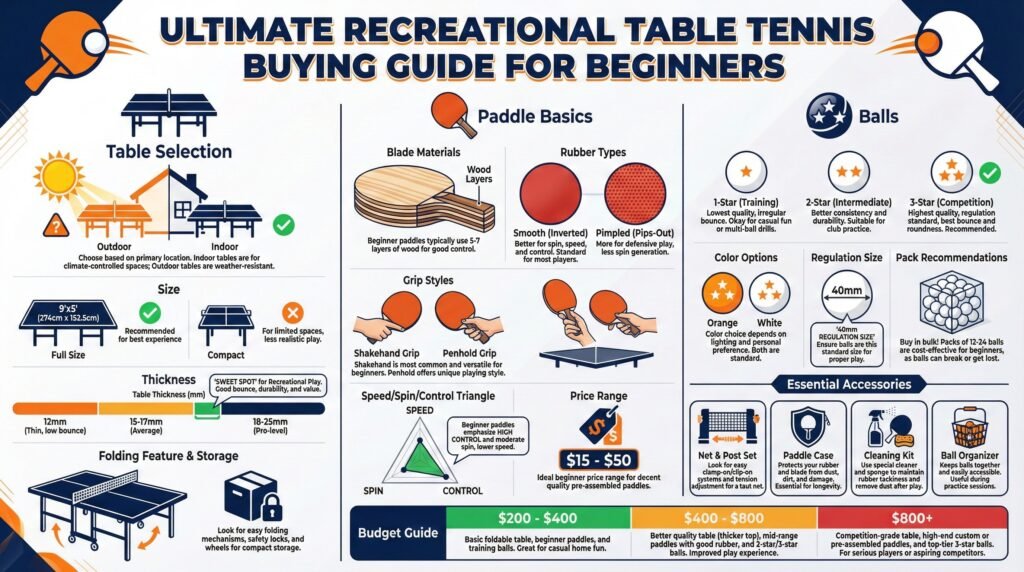
You’ll need four basics: a table, paddles, balls, and a net. Buying individual items allows customization, but sets offer convenience.
- Table: The centerpiece. Indoor models are ideal for homes, with foldable designs for storage.
- Paddles: Typically sold in sets of two or four. Look for pre-assembled ones with sponge and rubber for better control.
- Balls: Small (40mm diameter), celluloid or plastic. Higher star ratings indicate better durability and bounce.
- Net: Adjustable clamps ensure a secure fit.
Understanding these basics lays the foundation for smarter purchases, addressing common confusions such as ball ratings and paddle durability.
Key Considerations
When shopping for recreational table tennis gear, several factors influence your choices. Tailor them to your audience’s specific needs, such as space-saving options for students or durable builds for family use.
Space and Size Constraint: Fitting a table at home is tough. Full-size tables need about 20×15 feet. If short on space, try:er:
- Mini Tables: Compact (around 5-6 feet long), portable, and great for apartments or desks. Ideal for university students.
- Conversion Tops: Place over pool or dining tables—perfect for suburban parents looking to maximize existing furniture.
- Foldable Models: Wheels for easy storage, suited for home office workers or retirees with limited garages. Measure your area first; keep at least 5 feet clearance around the table.ay.
Budget and Value
Entry-level setups range from $100 to $ 300 for basics, while premium setups can reach $500+. For beginners, mid-range ($200-400) offers the best balance. Factor in long-term value: Cheaper tables with thin tops (under 15mm) warp easily, leading to poor bounce. Prioritize thickness (18-25mm for indoors) for durability.
Retirees can pick affordable, low-maintenance kits. Parents should invest in sturdy options for kids.
Durability and Quality. Choose MDF tops for less warping; steel frames for sturdiness. Go for ITTF-approved rubber paddles for bounce. Balls: A 3-star gives better bounce and roundness than a 1-star.
Address major pain points by selecting weather-resistant outdoor models if your space is exposed to the elements, or prioritizing indoor models for most users. This helps tackle confusion about where equipment fits best and which options actually solve space or durability challenges.
Step-by-Step Guide. Ready to buy? Use these steps to pick gear that fits your needs.
Step 1: Choosing the Right Table. Start with the table—your main investment. Beginners should want easy assembly and portability.ty.
- Full-Size Indoor: JOOLA Inside 15mm Table ($300-400)—foldable, with playback mode for solo practice. Great for home offices. Outdoor/Durable: Prince Challenger ($400+)—weatherproof; fit for garages, patios, or families.
- Space-Saver: STIGA Mini Table ($150)—compact for dorms or retirees’ small spaces.
- Ready to upgrade your game room? Check out the JOOLA Inside 15 for reliable recreational play.
Step 2: Selecting Paddles for Casual Play
Paddles affect control and fun. Beginners need forgiving ones with a thick sponge (1.5-2mm) for bounce.
- Beginner Sets: STIGA Recreational Paddles ($20-40/set)—durable 5-ply blades for consistent hits.
- Mid-Level: Killerspin Impact ($50/set)—great spin for improving skills, suited for parents and students. All-Wood: Yasaka Sweden Classic ($60)—great for retirees wanting lightweight control.ol.
Don’t buy sandpaper paddles—they lack spin. Test grip: Use a shakehand grip for most, a penhold grip for precision.
Grab the STIGA Recreational Paddle Set today and start rallying with family.
Step 3: Picking the Best Balls
Ball quality resolves confusion—1-star is basic/training, 2-star mid-grade, 3-star premium for consistent bounce.
- Recreational Choice: JOOLA 3-Star Balls (12-pack, $10-15)—regulation size, durable plastic.
- Premium: Butterfly 3-Star ($20/pack)—super durable for frequent play.
- Budget: Double Fish 1-Star ($5/pack)—for casual, infrequent use. Buy in bulk to avoid running out mid-game. Plastic balls (post-2014) are safer and more consistent.nt.
Stock up on JOOLA 3-Star Balls for endless recreational fun.
Step 4: Nets and Accessories
Nets should clamp easily (adjustable to 6 inches high). Bundled ones work, but upgrade to retractable for portability ($10-20). Add-ons: Ball holders, dust protection covers. Assemble gear—most sets take 30-60 minutes to set up.
Expert Tips
Elevate your experience with these pro insights. Wipe tables with mild soap. Store the paddles flat to keep the rubber in good condition. Replace cracked balls.ed.
- Improving Play: Practice serves—focus on underspin for beginners. Use apps for tutorials. Host small tournaments for family or friends; retirees enjoy the low impact. Add a rubber cleaner ($10) once you’re ready for upgrades. Use stable surfaces; warm up to prevent strains. nsMulti-use tables with wheels can double as desks for small spaces.
Now that you’re equipped with tips and accessories, keep an eye out for common mistakes as you continue your journey.
Common Mistakes
Avoid these pitfalls to save time and money:
- Ignoring Space: Buying a full-size table for a tiny apartment leads to frustration. Always measure cheap paddles with thin rubber; they lose bounce fast and discourage play.
- Ball Confusion: Sticking to 1-star balls leads to inconsistent gameplay; upgrade to 3-star balls for better fun.
- Overlooking Assembly: Some tables require tools—check reviews for ease of use. Try gear in-store if possible. Online, read user reviews for durability.ty.
By avoiding these mistakes, you’ll be set up for seamless, satisfying table tennis sessions that truly fit your lifestyle. Ready to bring it all together?.
Conclusion: Recreational table tennis brings joy, exercise, and a sense of connection to life. Whether breaking up work, bonding with family, fitting in a dorm, or staying social in retirement, the right gear matters. We’ve covered everything—now it’s your turn to serve! Start small: pick a foldable table, good paddles, and 3-star balls. Setups under $300 remove entry barriers. Rally on and see how this game changes your free time.